

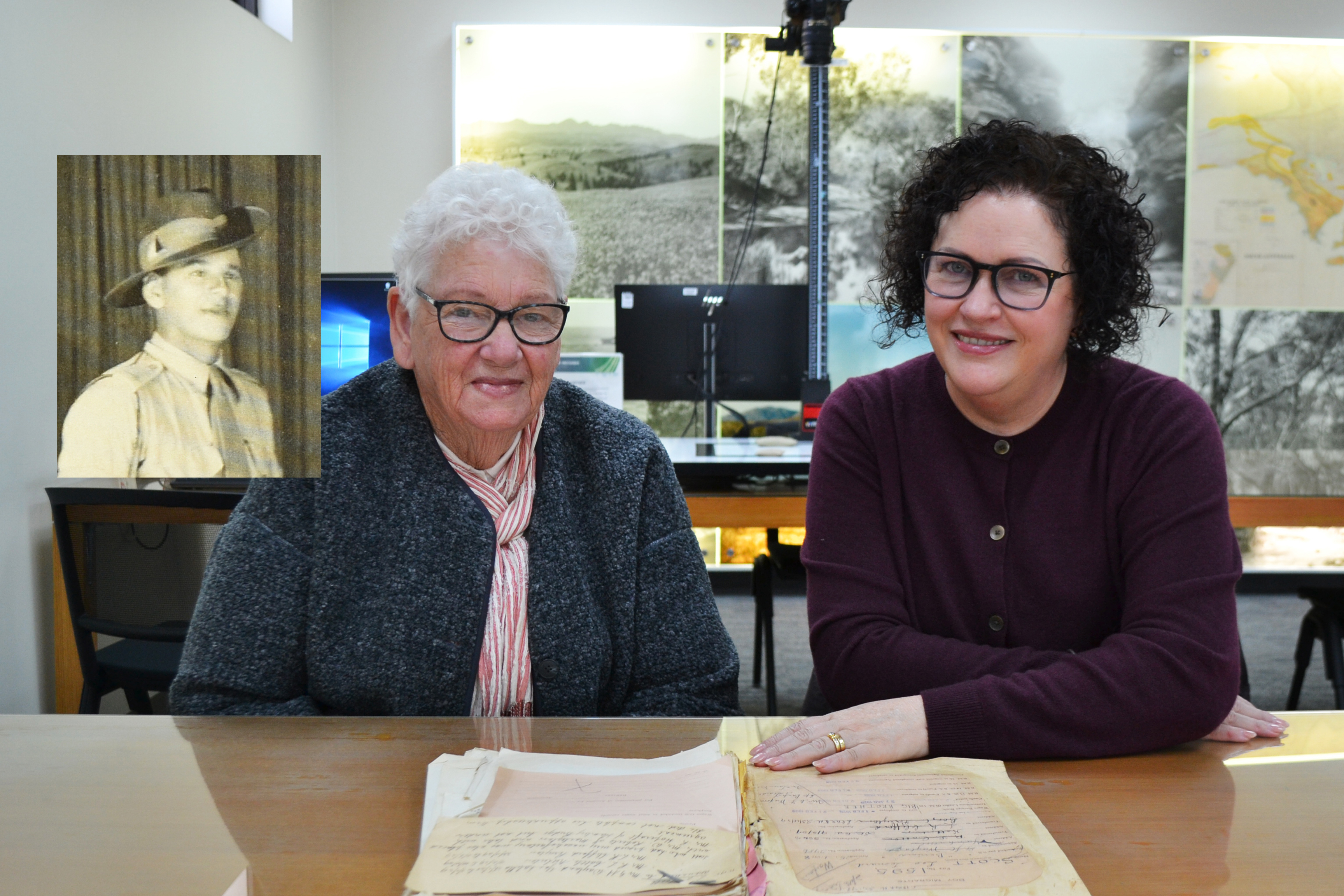
Natalie and Joanne read Leo Leonard Scott’s letters from his time as a ‘Little Brother’ in Australia’s Big Brother scheme in South Australia. Picture by SRSA
The skills needed to survive being a prisoner of war (external site) (POW) while building the Burma Railway during World War II were influenced by learnings from being an apprentice farmer (PDF) and a swagman, although his endurance was more probably a testament to his own resourcefulness and resilience.
Leo Leonard Scott (external site) was an acting Sergeant Major for the Australian Army in the Second World War in the 2/2 motor transport division, serving from February 1941-October 1945.
It followed his experiences of being a Boy Migrant, or “little brother”, as part of South Australia’s Big Brother apprentice farmer scheme (external site), where he learned how to cultivate fruit, and be frugal as the Depression hit and he worked odd jobs to support himself.
“It was probably just as well he lived off the land for several years before he ended up having to be a prisoner of war (POW) because at least he could look after himself and he could look after other people as well. It’s a bit of a full circle moment,” his daughter Natalie said.
Leo arrived in South Australia from Birmingham, UK, on January 25, 1928 - his 16th birthday - as part of the country’s Big Brother apprentice farmer scheme, spending a lot of his time around the Yankalilla district.
When his apprenticeship – which he didn’t finish – ended, he chose to stay in Australia.
Without a job, assets, or family to support him, he went back to Yankalilla where he first was located through the scheme and grew a vegetable garden and undertook odd jobs around the Yankalilla district.
He became a swagman, camping on the beach at Cape Jervis or in the scrub at Yankalilla, and later ‘jumping’ on trains to places such as Gilgandra and Broken Hill.
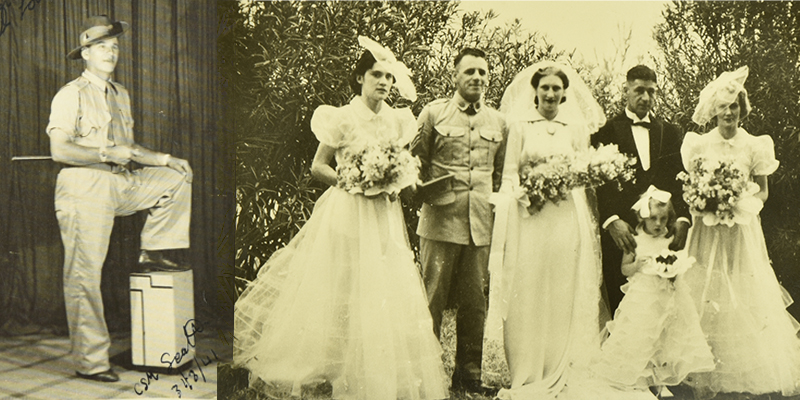
Left, Leo Leonard Scott in Singapore in 1941 with the Australian Army. Right, on his wedding day in December 1940 with wife Anne and their bridal party.
World War II
Leo joined the Australian Army’s militia as World War II started, travelling to Alice Springs in June 1940, where he met Anne Scott, who he married before the year’s end.
He joined the Permanent Military Forces and boarded the Queen Mary from Sydney in February 1941 destined to Europe, but the ship was diverted to Singapore as the Japanese advanced.
He spent time in Singapore and Malaya before becoming a POW, working on the Burma Railway, cutting through the infamous Hellfire Pass of hard rock with hand tools and shovels until the Japanese surrendered.
He shared stories with his daughter Natalie about what he ate during that time, including eating weevil-riddled rice, plus snails, cockroaches, even turtle soup, to survive.
“(The POWs were) absolute skin and bone. Dad often said… “If I didn’t eat rice, I’d have been dead,” Natalie said.
When he returned to Australia, he and Anne had four children and lived in Normanville and Second Valley, moving later to Adelaide, Moonta and back to Yankalilla, the town that started his journey Down Under.
Among the work he did was sheering, building, fishing, and playing in a country dance band.
“He was very happy-go-lucky,” Natalie said.
“He was a musician… he always played music. The sax was his favourite instrument.”
The Big Brother migrant scheme
Leo was 14 when his mother signed him up to be a Boy Migrant, thinking it might be a “good opportunity” for him.
State Records of South Australia is custodian to more than 160 applicants of the Big Brother Scheme.
Introduced under the Immigration Act, 1923 (external site) (PDF), the scheme supported youth between the ages of 15-21 who came to South Australia with support from the Commonwealth Government.
The applicants, or “boy immigrants”, would be assigned to a farmer, or “Big Brother” to gain a farming apprenticeship. It was similar in nature to the Barwell Boys (external site) scheme.
Leo’s record reveals he travelled on the SS Berrima and docked at Outer Harbor in Adelaide on his birthday.
In the application for a farmer to receive a boy migrant, as requested by his first employer, Gilbert Hartley Wayland, of Yankalilla, it said the boy would be trained in fruit growing mainly.
Among his duties would be milking one cow, watering trees, cultivating, box making and ploughing.
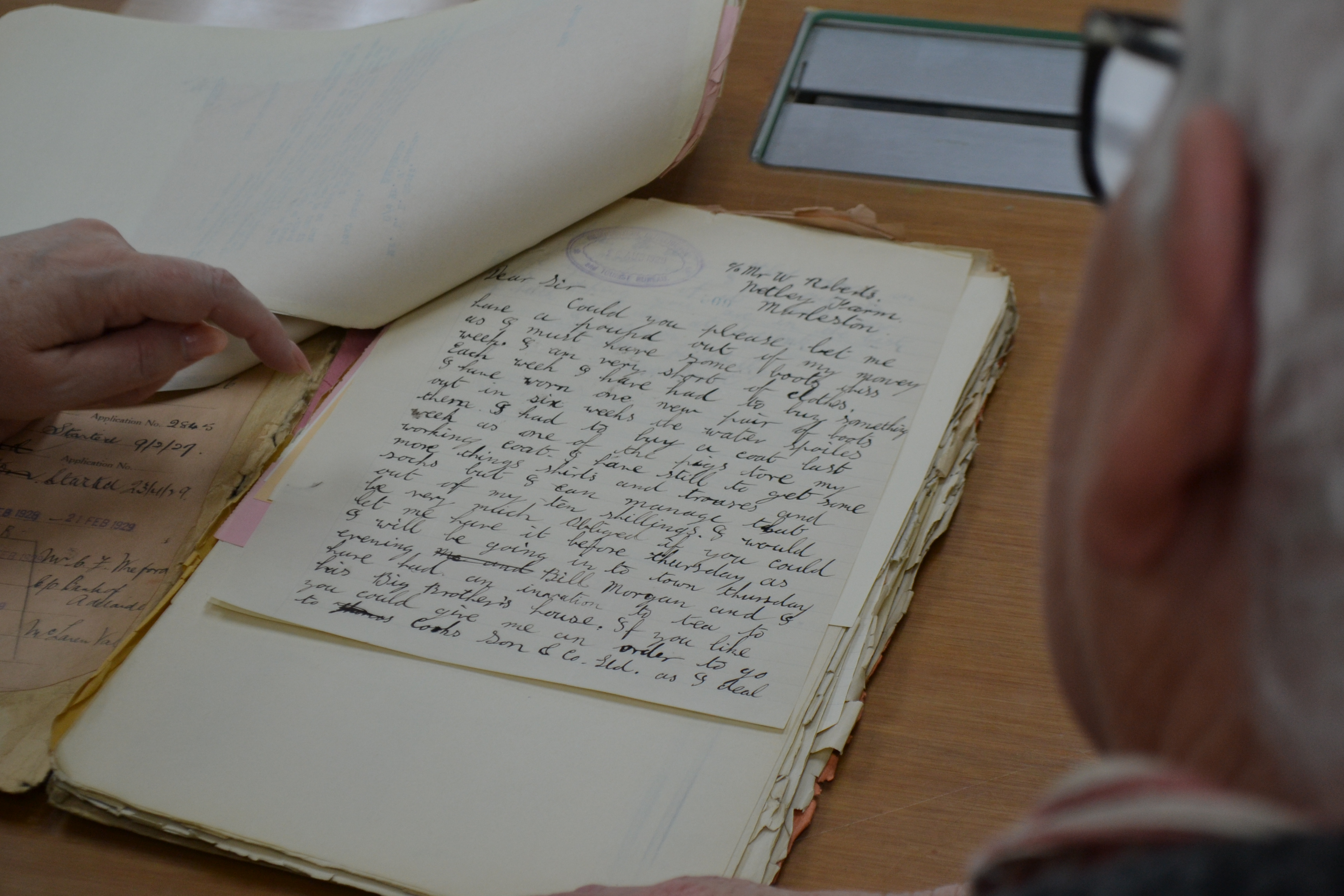
One of the letters Leo Leonard Scott wrote while a Little Brother. Picture by SRSA
He doesn’t know anything about farm work
Leo moved between three different farmers during his time in the scheme. Letters in his file between the Immigration Intelligence and Tourist Bureau and his employers show it wasn't all plain sailing.
One employer wrote, "this boy Scott, he doesn't know anything about… farm work”.
“He did not know how to harness a horse or what end of a horse a collar went on.” Natalie said this is not surprising for a boy born in the industrial town of Birmingham.
Leo made several requests to the Bureau for an advance on his payment so he could buy new clothes and boots.
“I had to buy a coat last week as one of the pigs tore my working coat,” he wrote in one letter.
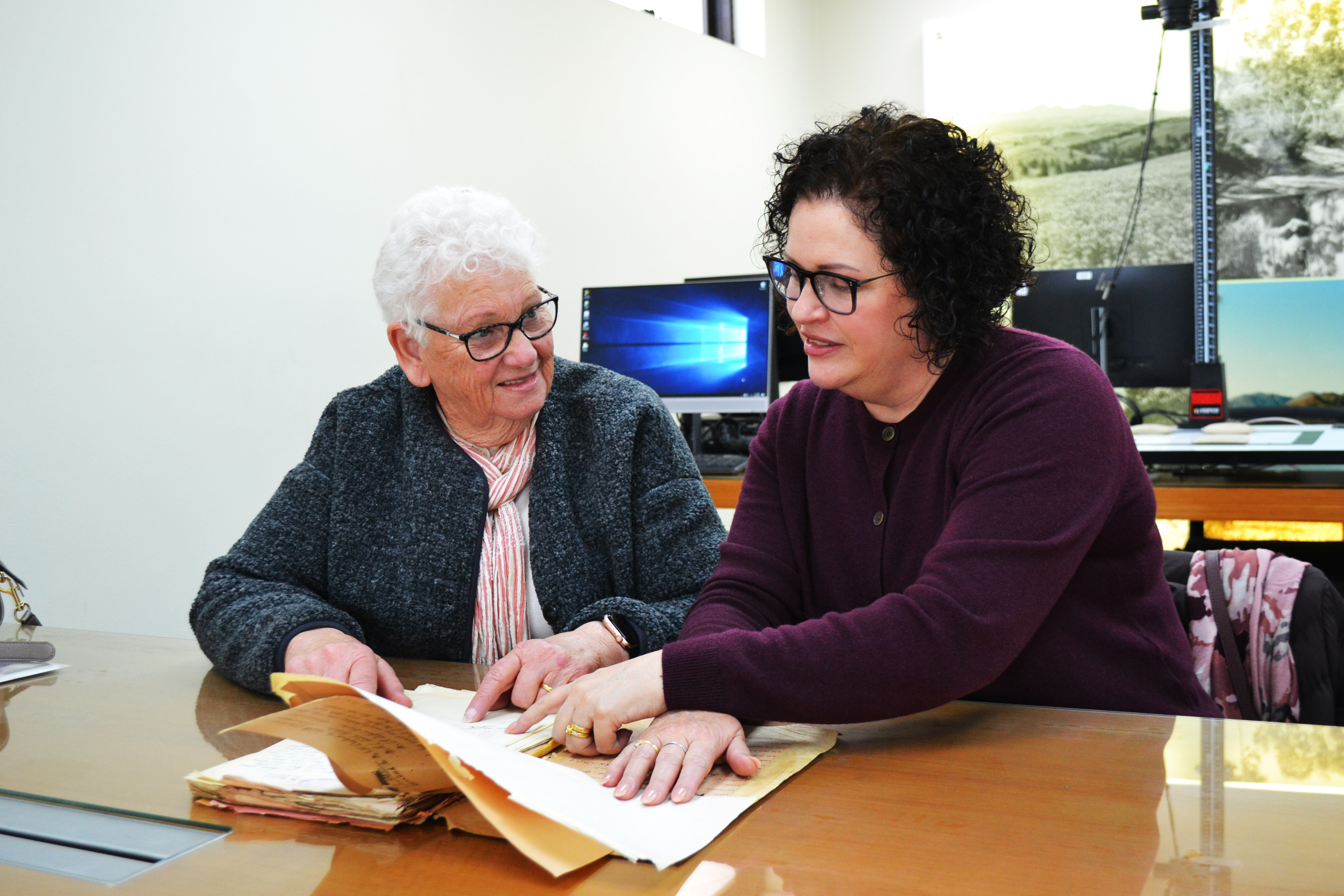
Natalie and Joanne with the "priceless" documents they discovered of Leo Leonard Scott within State Records of South Australia’s Gepps Cross repository. Picture by SRSA
Self-determination
A surprising moment for granddaughter Joanne was reading about an advance he wanted on his pay to become a fisherman.
“(He wrote) ‘I’m not great at this thing (farming) so can I have my money so I can go do what I aspire to do. I want to buy a boat. I want to go fishing. I want to sell fish.’ That was very typical of him’,” Joanne said.
Seeing the record helped Natalie and Joanne got a clearer understanding of his first three years in Australia.
“We didn’t know what life was like for him at that time because he really didn’t talk about it,” Natalie said.
“We didn’t know there were handwritten letters by him about what was happening in his life - letters we could read and obtain from State Records," Joanne said.
"Having these documents from his first three years in South Australia is priceless for our family."
Leo died in Victor Harbor on September 2, 2005, aged 93 (external site).
For more information about the Boy Migrant scheme, click here (external site).
